
Cheap Car Insurance with No Deposit
With rates going up many drivers are seeking cheap car insurance with no deposit.
The allure of “no deposit” car insurance is a powerful marketing tool for drivers on a tight budget. The idea of securing coverage without an upfront payment sounds like a financial lifeline, especially for those juggling bills or facing unexpected expenses.
But the question still remains: is cheap car insurance with no deposit truly possible, or is it a misleading promise? Let’s dive into the realities, explore how insurers operate, and uncover practical ways to minimize upfront costs while securing affordable coverage.
The Truth About "No Deposit" Car Insurance
The term “no deposit” car insurance is often splashed across advertisements, but it’s a bit of a misnomer. Reputable insurers, bound by the financial realities of risk management, require some form of initial payment before a policy takes effect. This payment, often labeled a “deposit” or “down payment,” is typically the first month’s premium or a percentage of the total policy cost.
The misconception arises when companies advertise “no deposit” to mean spreading the annual premium evenly over monthly payments, rather than requiring a larger upfront sum. In truth, you’ll always need to pay something before your coverage kicks in; there’s no such thing as free insurance.
For example, a 2025 online analysis found that the initial payment for minimum coverage can be as low as $41 with some major insurers. This isn’t a separate fee but part of the premium, applied toward your total policy cost. Insurers like GEICO, State Farm, and Progressive often allow monthly payment plans where the first month’s premium serves as the “deposit.” While this isn’t truly “no deposit,” it can feel more manageable than paying a lump sum for a six- or twelve-month policy upfront.
Why Insurers Do Require an Initial Payment
Car insurance is a contract where you pay premiums to transfer the risk of financial loss to the insurer. Without an initial payment, insurers would bear the full risk of covering you, say, for an accident or theft, before receiving any funds. This would be unsustainable, as it could lead to significant losses if policyholders file claims without contributing premiums. The initial payment, whether it’s 10-20% of the annual premium or the first month’s cost, secures the contract and ensures you have a stake in maintaining coverage.
Some providers, like OCHO, claim to offer “no deposit” insurance by covering the initial premium through a loan, which you repay in installments. However, this often comes with broker fees (around $7 per payment, per OCHO’s model) and may not always be cheaper than traditional plans. Be cautious: if an offer sounds too good to be true, it might involve hidden costs or questionable legitimacy.
Strategies You Can Use To Minimize Upfront Costs
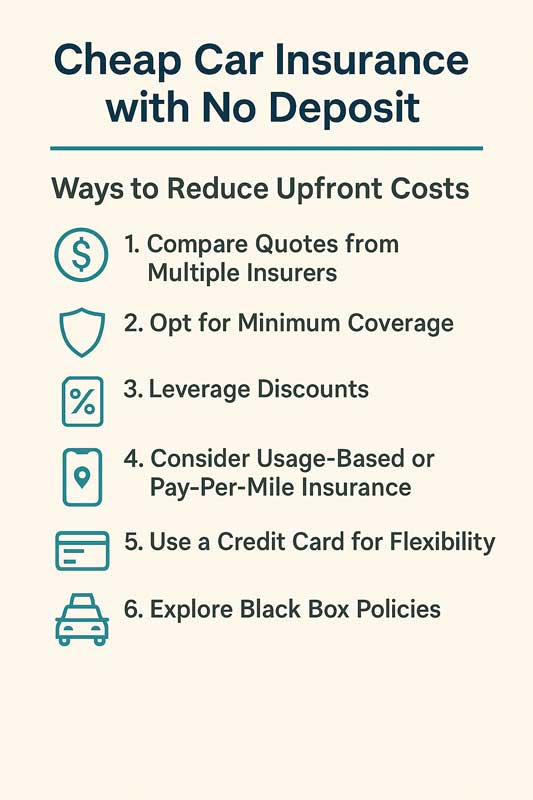
- Compare Quotes from Multiple Insurers
Shopping around is the most effective way to lower your premium, which directly reduces your initial payment. Websites like Compare.com let you compare quotes from dozens of providers in minutes. For instance, Insurify’s 2025 data highlights COUNTRY Financial and Auto-Owners as some of the cheapest options, though availability varies by state. Aim to get quotes from at least three insurers to find the lowest rate tailored to your driving record, location, and vehicle. - Opt for Minimum Coverage
Choosing your state’s minimum required coverage – typically liability insurance for bodily injury and property damage – keeps costs way low. An analysis by online comparison site NerdWallet notes that minimum coverage policies can start at $41 monthly with major insurers.
However, the bad news is that minimum coverage offers limited protection, leaving you vulnerable to out-of-pocket costs for damage to your own vehicle. Weigh the risks carefully, especially if you drive an older car that doesn’t require comprehensive coverage. - Leverage Discounts
Many insurers offer discounts that can lower your premium and, by extension, your initial payment. Common discounts include:
Safe driver discounts: For a clean driving record or completing a defensive driving course.
Low-mileage discounts: Ideal if you drive less than 10,000 miles annually.
Bundling discounts: Combining auto with home or renters insurance can save 25–50%, per MoneyGeek’s 2025 findings.
Automatic payment discounts: Some insurers, like GEICO, offer 3–8% off for setting up autopay.
Ask your insurer about all available discounts to maximize savings. - Consider Usage-Based or Pay-Per-Mile Insurance
If you drive infrequently, usage-based or pay-per-mile insurance can reduce costs. Usage-based insurance (UBI) tracks your driving habits via a telematics device or app, rewarding safe driving with lower premiums. Pay-per-mile plans, like those from Hugo, charge a base rate plus a per-mile fee, often requiring a lower initial payment. However, these policies may penalize poor driving or offer less coverage than standard plans, so evaluate your driving habits first. - Use a Credit Card for Flexibility
Paying the initial premium with a 0% interest credit card can spread the cost over 30 days without interest, provided you pay off the balance before the interest-free period ends. This approach, suggested by MoneyGeek, gives you breathing room to manage cash flow. Just avoid letting the debt linger, as interest charges could outweigh the savings. - Explore Black Box Policies
Telematics or black box insurance, popular with younger drivers or those with lower credit scores, monitors driving behavior to adjust premiums. Safe drivers can earn lower rates, and some providers offer lower initial payments. FreePriceCompare notes that black box policies are a good option for budget-conscious drivers, though you’ll need to be comfortable with your driving data being tracked.
Hidden Costs to Watch For
Add Your Heading Text Here
Your credit score can impact your ability to secure low-deposit insurance. Insurers often perform soft credit checks for monthly payment plans, as these involve financing the premium. A lower credit score may lead to higher interest rates or a larger initial payment, as noted by Uswitch. Improving your credit by paying bills on time or reducing debt can help you qualify for better terms over time.
Cheap Is OCHO a Game-Changer?
OCHO’s model, launched in 2025, claims to revolutionize no-deposit insurance by covering the initial premium and offering flexible payment plans. While innovative, it’s not entirely deposit-free – you’re essentially borrowing the upfront cost, repaid with fees. This can be a lifeline for cash-strapped drivers, but compare OCHO’s total cost against traditional insurers to ensure you’re truly saving.
The Final Word On Cheap Car Insurance With No Deposit
Cheap car insurance with no deposit is more myth than reality, but low upfront costs are achievable with the right approach. By comparing quotes, opting for minimum coverage, leveraging discounts, and exploring usage-based or pay-per-mile options, you can keep your initial payment manageable. Always prioritize reputable insurers and beware of offers that seem too good to be true.
Now that you know what companies offer cheap car insurance with no deposit, it’s time to compare online rates. Fill out an easy application in about five minutes and comparison shop up to 10 quotes. Save more money on cheap auto insurance with direct rates.